From Tartu Furniture Factory to Tarmeko
"Land feeds the farmer, sea feeds the fisherman and wood feeds the carpenter. In the opera and blow songs, one sings about the land and seas. For the wood and carpenter positions, one shares very few words, not to mention the melody." by Vello LäänTartu Furniture Factory has one of the first to provide and develop the furniture producers traditions and skills. This is one of the reasons why this company's products were very popular in the Soviet Union. Some interesting references are The Kremlin Congress Palace, Uljanovski Memorial Complex and in 1980 the Olympic regatta objects.

In the Furniture Factory sawmill, the log transport and process was fully automated and the saw frames worked remotely. Step by step the factory moved from manual labour to machine production. The effective job management was very important for the company: the job was easier and faster thanks to different assembly lines. During the Furniture Factory times, the main product categories were furniture, lumber, sets of wooden containers and toys. During the Soviet Union times, the factory specialised more on office and cabinet furniture production.

Consistently templates for new models were created and the most efficient technology was searched to increase the product selection. Laboratories, these days measurement technique and standardisation services watched over the production technology and helped to improve the quality of the products.
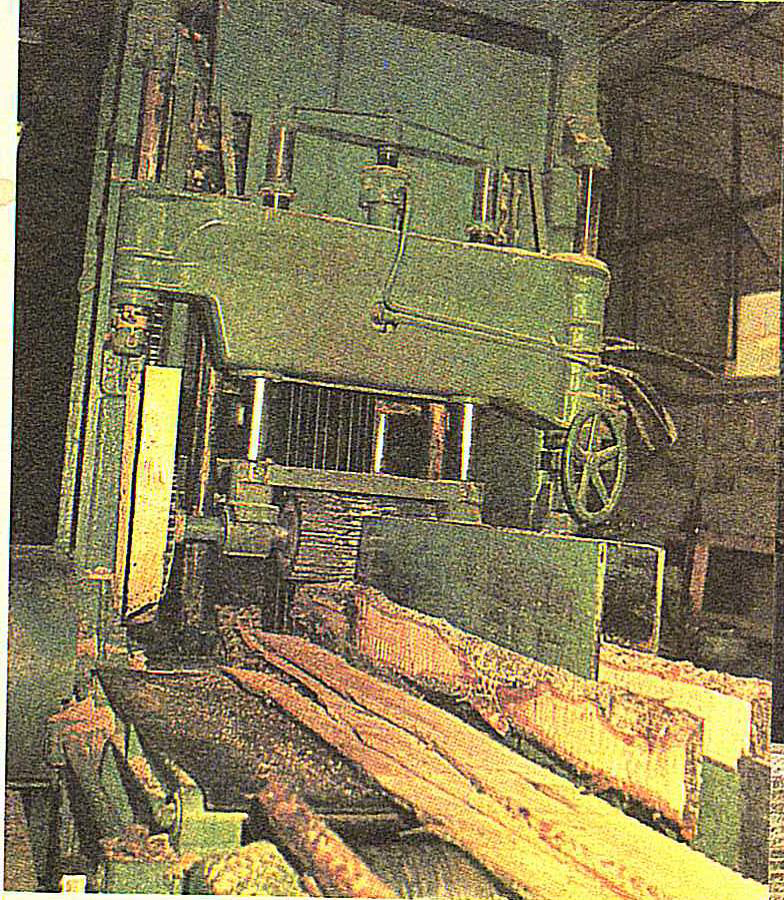
The raw material was always highly valued in the factory, because of what it was common to use the most of it. In numbers it would look like this:
- From the wood that came to the factory, 67% of it was used in full
- The waist was about 10-13% and 90% of it went to the chip production.
- 18-21% were dust and sawdust, which went to the heating boilers together with inferior chips.
- 2% was an inevitable technological loss.
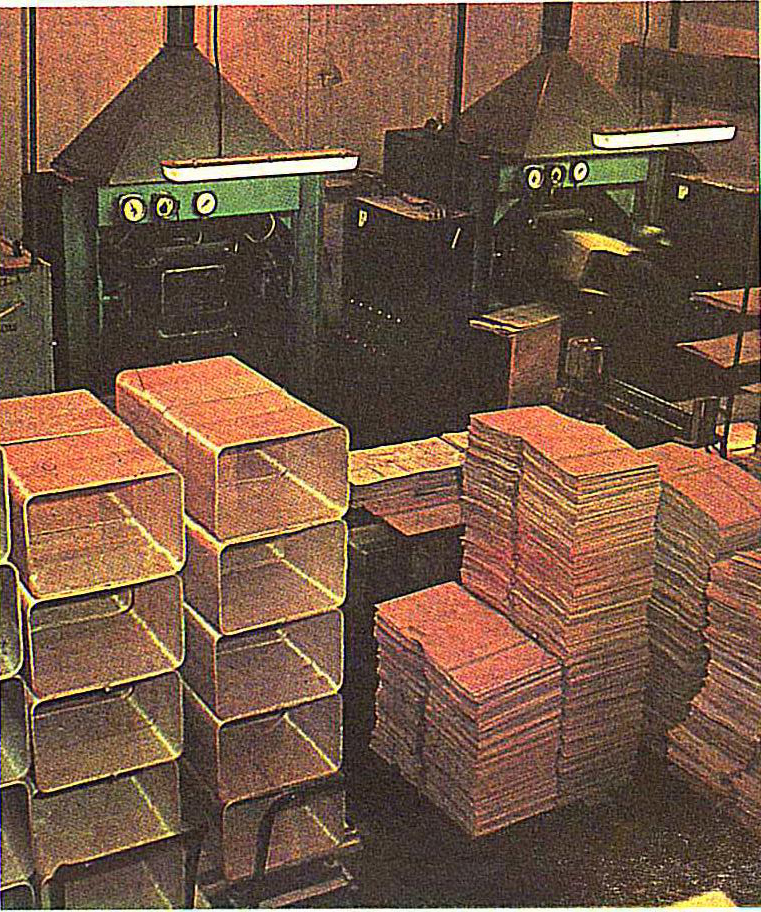
To conclude the wood was used by 100%. The principles, which were followed by the Furniture Factory days, are still important. How was the nowadays Tarmeko created? The following list shows the most important events in the factory history.
- In 1947 to 1956. the artell „Puit“ was active and it was combined into the furniture factory during 1956.–1960.
- In 1969. the Tartu Furniture Factory was created.
- In the late 80s, the Tartu Furniture Factory and Forest Factory were united - this is how Tarmeko was created. Later was this company called RAS Tarmeko, which was a government company.
- In 1992. the company was privatised.
- In 2005 the Tarmeko factories were made independent.
- In the Furniture factory were 972 workers of which 385 (40%) were women.
- A quarter of the production was sold in Estonia, the rest went to the other Soviet republics. The biggest consumers were Moscow ( 2 million rubles), Tallinn (1,5 million) and Leningrad (400000). In Tartu the turnover was about 111000, which is less than in Baku, Novosibirsk, Minsk, Moscow Region, Sverdlovsk, and Leningrad region.
- In the early days, one-third of the raw material came from abroad (mainly Karelian or Leningrad region), in the year 1986 it was 2/5.
- The factory had 33 cars, 23 lifts, 5 cranes and the cars with TMK logo drove yearly about 1 million kilometres.


The year 2005 and the new Tarmeko structure
In 2005, Tarmeko Group was reorganised into five independent companies, each specialising in a different area of business. At the time, the group consisted of:
• TARMEKO PEHMEMÖÖBEL OÜ - specialised in the production of upholstered furniture, combining craftsmanship with long-term manufacturing experience and the capability to produce both custom-made and own-brand furniture.
• TARMEKO LPD OÜ - specialised in the production of bent plywood components and furniture, with a strong focus on product development and continuous improvement of manufacturing technologies.
• TARMEKO SPOON AS (today Tarmeko Spoon OÜ) – was established as the group's specialised manufacturer of rotary cut veneer.
• TARMEKO METALL OÜ - specialised in the design, manufacture and installation of automated painting and shot-peening lines. The company was part of Tarmeko Group at the time of the reorganisation.
• TARMEKO KV OÜ -
was established to manage the group's real estate and industrial properties.
Since 2005, Tarmeko Group has continued to evolve. Some companies have changed their legal form or business focus, while the group's commitment to quality, long-term partnerships and sustainable development has remained unchanged.